Key Takeaways
- 01A screwdriver sinks into joists or posts — rot is structural, not cosmetic
- 02The ledger board has no flashing and the siding behind it is stained
- 03Posts wobble or footings have heaved out of the clay
- 04More than 20% of boards are cupped, split or splintering
Repair or Replace?
Houston humidity, clay soil movement and 20 years of sun take decks apart from the frame outward. Surface boards are cheap. The structure underneath is what decides whether deck repair is worth the money.
The 7 Signs
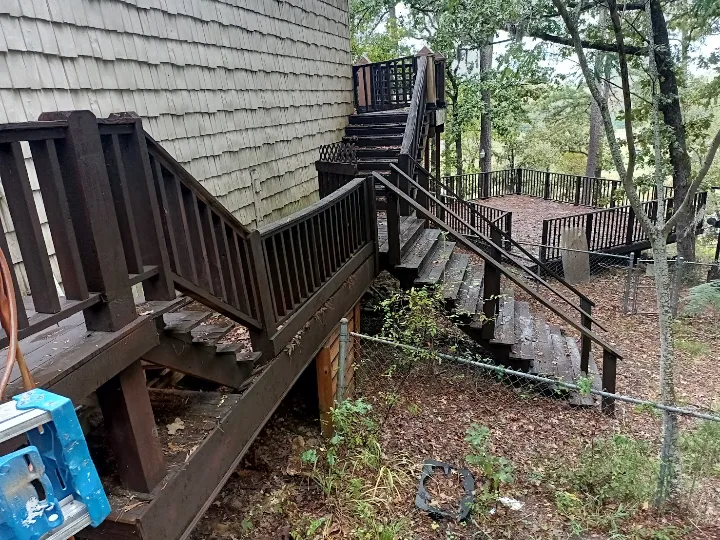
- A screwdriver sinks into joists or posts — rot is structural, not cosmetic
- The ledger board has no flashing and the siding behind it is stained
- Posts wobble or footings have heaved out of the clay
- More than 20% of boards are cupped, split or splintering
- Rusted or missing joist hangers and nails backing out
- Stairs bounce, or risers are uneven from settling
- Railings flex when you lean on them
Two or three of these and a repair makes sense. Five or more and you're paying twice — the frame will fail under new boards.
What a Replacement Looks Like
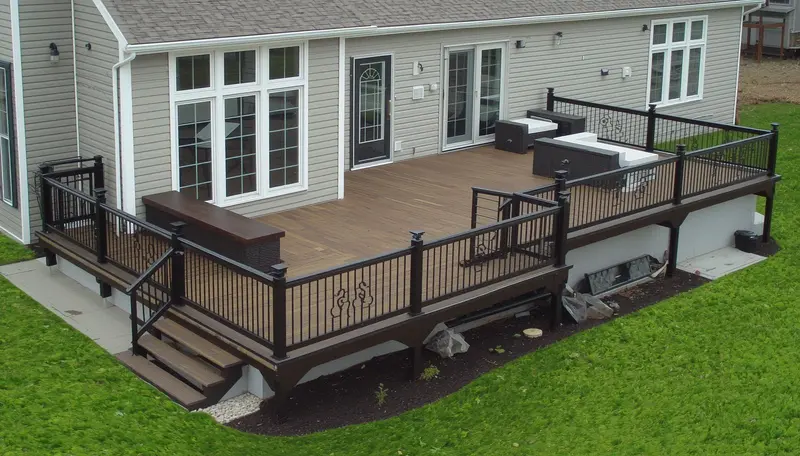
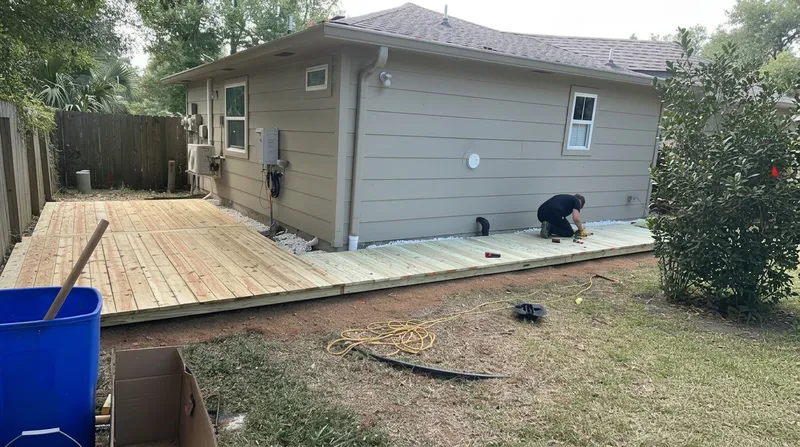
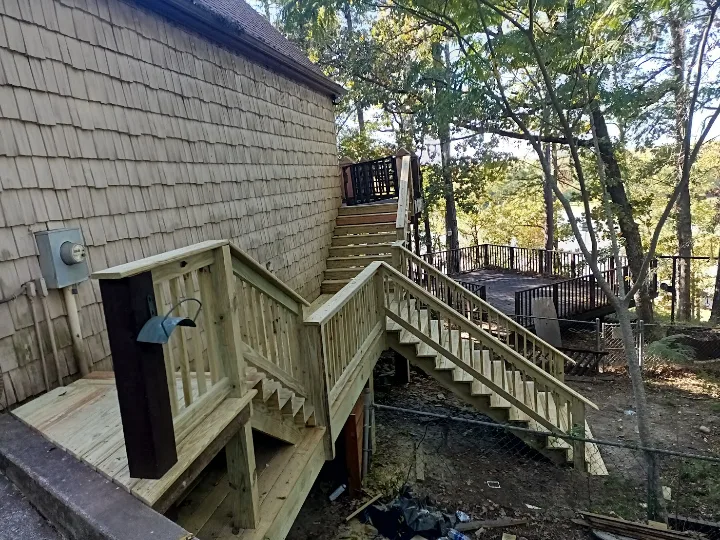
We tear out to the dirt, set new concrete piers, frame with correct joist spans, flash the ledger properly, and finish in pressure-treated wood or composite.
Cost to Replace in Pearland
Tear-out and haul-off runs $3–$6 per square foot; a new pressure-treated deck runs $28–$45 per square foot and composite $38–$60. Full numbers are in the deck cost guide.
Not sure which side of the line your deck is on? We do free on-site inspections across Pearland, Manvel, Friendswood and Houston. See finished rebuilds in the gallery and recent projects, or book an estimate.
Recent Deck Repair Work
View Gallery